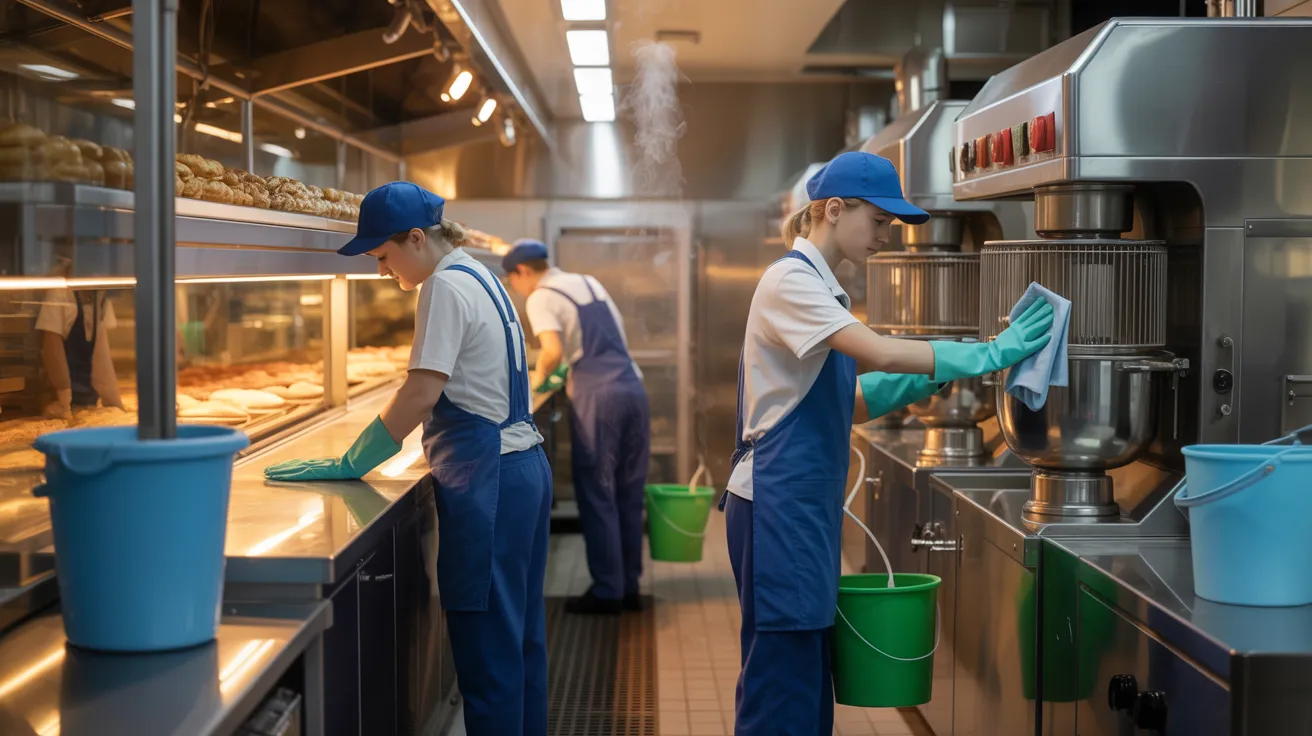
Professional sanitation and food hygiene professionals in Brampton support food establishments, commissaries, baking facilities, warehouses, and food service operations staying compliant. They decontaminate high-contact points, food preparation surfaces, equipment, floors, drains, restrooms, and food handling spaces using certified products, maintaining proper ratios, and documenting contact times. You need scheduled cleaning determined by risk, volume, food allergies, and regulatory assessments, along with documented proof backing HACCP, audits, and regulatory adherence. The following information explains what strong sanitation programs should include.
Important Highlights
- Brampton's sanitation specialists support restaurants, grocery departments, commissaries, warehouses, bakeries, schools, mobile vendors, and allergen-sensitive operations.
- High-touch surfaces, food-contact equipment, kitchens, floors, drains, restrooms, and storage areas are treated using sectional methods to reduce cross-contamination.
- Documentation of completion through swabs, reviews, and corrective-action records verifies approved providers have validated proper chemical concentration, alignment, and exposure duration.
- Hazard, production rate, transitions, accidents, and standards need to guide sanitation timelines, with everyday, weekly, and cyclical duties allocated by zone.
- Select suppliers with HACCP, public-health, understanding, WHMIS, training, protection, testimonials, coded implements, and compliance-ready sanitation files.
What Brampton Venues Require Food Safety Cleaning?
Brampton venues that deal with, maintain, prepare, package, or provide food require food safety cleaning. Implement it if your establishment is regulated by public health inspection, food premises regulations, or internal HACCP-based controls. The rule covers eateries, dining facilities, warehouses, supermarket areas, meat counters, fish departments, retail outlets, and institutional kitchens.
Adherent hygiene cleaning is furthermore required in warehouses, food manufacturing plants, cold storage sites, retail bakeries, school nutrition programs, banquet halls, and meal delivery hubs. Mobile and temporary operations count as well, including food trucks, event vendors, and temporary stalls. Your venue needs documented cleaning protocols when your workers process ingredients, portion ready-to-eat items, reheat products, or store allergens. In Brampton, food safety continues to be not elective; it constitutes legal, operational, and consumer protection compliance.
What Services Do Brampton Cleaning Experts Provide?
You require experienced cleaning professionals who disinfect high-touch surfaces, cooking areas, flooring, and bathrooms to maintain food safety and public health requirements. These locations are prioritized because they carry the greatest contamination risk, falling hazards, and health code violations.
When you understand what they clean, you can ensure your operation's cleaning procedures satisfy compliance and operational standards.
Cleaning High-Touch Points
Brampton janitorial experts emphasize high-touch surface sanitizing because these touch areas can transmit pathogens and contaminants throughout a space. You need a documented schedule for cleaning entry points, contact surfaces, control panels, railings, shared devices, registers, and cold storage handles. Applying touchpoint mapping, specialists locate every high-traffic area and establish cleaning timing
if results fall outside required standards. Furthermore, they avoid cross-contamination by changing towels, implementing one-way workflows
Cooking Zones, Walking Surfaces, and Restroom Environments
Professional cleaners in Brampton concentrate on kitchens, floors, and restrooms given that each location involves specific contamination control, slip-and-fall, and public health requirements. In industrial kitchens, you need grease removal from cooking stations, appliance surfaces, drain systems, preparation areas, and backsplashes to minimize bacterial growth and pest activity.
Floor care that is recorded should also be anticipated. Technicians clean and remove buildup from tile grout, ceramic surfaces, and vinyl floors, then apply correct drying techniques so you can reduce slip incidents and meet regulatory standards. They also handle entry points where dampness and dirt enter the building.
Restroom sanitation requires decontaminating touchpoints, fixtures, partitions, dispensers, and waste containers, restocking supplies and controlling odours. They also maintain restaurant cleaning supply rooms where product storage, sink cleanliness, and drain systems impact daily sanitation standards and worker protection.
Why Food Safety Cleaning Matters in Brampton
In Brampton, you must copyright food-safe cleaning standards to satisfy regulatory standards and achieve compliance. You also minimize bacterial spread through proper cleaning of food-preparation surfaces, appliances, and frequently-touched items. Most importantly, you help protect community wellness by reducing the chance of food poisoning in your establishment.
Regulatory Code Requirements
Because Brampton food operations operate under stringent health requirements, food safety cleaning directly affects your ability to meet health code requirements, defend customers, and sidestep enforcement action. You must maintain clean food preparation areas, verifiable cleaning logs, appropriate product handling, and traceable training practices that meet municipal and provincial inspection expectations.
Extensive hygiene logs allow you to show due diligence during compliance reviews and show your procedures remain uniform, reproducible, and monitored. Comprehensive sanitation moreover supports allergen reduction by minimizing buildup on mutual appliances and high-touch areas.
Cross-Contamination Prevention
Adhering to regulatory guidelines requires your skill in preventing cross-contamination throughout daily food handling and cleaning. You need to isolate uncooked items from finished products, clean prep surfaces between tasks, and keep chemicals away from food-contact items. Structured procedures reduce transfer risks and ensure consistent compliance during inspections.
Building allergen segregation prevents priority allergens from contacting shared surfaces, containers, or equipment. Leverage separate cutting boards, colored implements, and strict utensil labeling so staff don't mix items in cooking or serving.Mandate hand cleaning following raw meat, seafood, eggs, or allergen-containing products. Swap wiping cloths regularly, and confirm sanitizer strength with test strips. When your team follows these practices every shift, you foster a cleaner, more secure operation that exceeds Brampton's safety standards consistently.
Public Health Protection
When sanitation efforts weaken, you don't only face inspection setbacks—you expand the chance of food contamination striking customers, staff, and the larger Brampton community. You also weaken your role in safeguarding community wellness, especially in high-traffic food premises where contamination can spread quickly through surfaces, equipment, and touchpoints.
You need cleaning protocols that remove contaminants, sanitize effectively, and confirm results. This requires following exposure durations, using authorized sanitizers, logging schedules, and coaching employees to satisfy regulatory requirements. These measures prevent pathogen control by minimizing pathogens before reaching surfaces or food. Throughout Brampton, strong cleaning protects vulnerable communities, minimizes disease potential, and demonstrates accountability. When you adhere to standards, you exceed regulations—you mitigate risk and facilitate secure food handling throughout the area.
In What Ways Does Cleaning Help Achieve Food Safety Compliance?
Implementing thorough cleaning protocols backs food safety compliance get going by lowering contamination exposure, preventing pathogen multiplication, and keeping your facility aligned with sanitation requirements under HACCP-based programs and public health regulations. You validate that product-contact areas are visibly clean and microbiologically controlled, enabling documented preventive controls and inspection readiness.
Cleaning strategies additionally fortify allergen mitigation by extracting residues that can cause undeclared allergen exposure.
Determining When to Plan Commercial Cleaning
spill incidents, and post-maintenance work
Establish weekly or every month maintenance for drains, vents, storage racks, and hard-to-reach equipment zones, based on inspection results and sanitation logs. Set aside seasonal deep cleaning to cover shutdowns, weather-related soil buildup, or pest-pressure periods
What Should You Look For in Brampton Cleaning Experts?
Start by screening providers against food sanitation standards, not price alone. You should verify that each company understands CFIA, public health, and HACCP-aligned expectations relevant to your facility. Ask for insurance documentation, WHMIS compliance, documented staff training, and supervision practices. Review whether technicians understand contamination prevention, chemical handling, and traceable sanitation records.
You should further examine operational reliability and answerability. Request testimonials from Brampton food businesses, then review response times, corrective action plans, and communication standards. Validate the company facilitates supplier audits and can supply compliance documentation to regulators or third parties. Confirm equipment receives maintenance, colour-coded tools are used appropriately, and site-specific hazards are identified. A qualified provider ensures regulatory compliance, product quality, and your brand reputation.
What aspects should a sanitation plan include?
Put together a written program that clarifies every sanitation duty, standard, and accountability ahead of production commencement. You should specify cleaning frequencies, approved chemicals, dilution rates, contact times, tools, and verification methods for each zone, surface, and piece of equipment. Make sure to include pre-operational inspections, corrective actions, and employee training requirements.
Your strategy should also address cross-contamination controls, waste handling, pest-prevention measures, and documented schedules for rest areas, drains, flooring, and food-contact surfaces. Describe how you'll keep raw and ready-to-eat processes separate, facilitate ingredient tracking, and ensure accurate allergen labeling through validated cleaning between product changes. You should set accountability, maintain signed records, and assess results against regulatory standards, HACCP controls, and customer requirements. When gaps appear, modify procedures immediately and retrain staff.
Popular Inquired Questions
Are cleaning services available for overnight shifts in Brampton properties?
If you run regulated facilities, you'll also require documentation that support inspections and maintain assurance.
Can sanitation professionals handle emergency spill response?
Yes, you can locate several Brampton sanitation experts offering spill containment services. They handle contamination, assess dangers, contain affected areas, and perform swift decontamination to minimize risk and prevent disruption. You should confirm timeframes, certifications, protocols, and procedures. If your facility needs compliance, pick a provider that documents incidents, follows procedures, and ensures verification.
Are plant-based disinfectants suitable for food-contact surfaces?
In essence, green disinfectants function safely for surfaces contacting food provided you source items marked food-safe that comply with regulatory compliant. Validate application timing, concentration levels, and rinse protocols in advance of use. Plant-derived products reduce harsh chemical exposure, although you must have evidence of effectiveness against target microorganisms. To ensure residue-free conditions, adhere to precise manufacturer instructions and confirm the disinfecting agent complies with relevant food safety standards.
Can cleaning schedules be modified for seasonal production changes?
Absolutely, maintenance plans can be customized for seasonal shifts. Modify frequencies, staff levels, sanitizers, and testing procedures to correspond to seasonal workflows while preserving regulatory adherence. Decrease production interruptions through planning sanitation surrounding equipment transitions, high demand periods, and equipment use patterns. Additionally update written procedures, employee training, and environmental testing to account for seasonal hazards, emerging allergens, or increased soiling. Periodic assessments preserve the plan efficient.
Will professional cleaning services train your staff on hygiene best practices?
Absolutely, commercial cleaners regularly deliver staff training on sanitation best practices. Your staff gets instruction on correct chemical handling, contact times, contamination avoidance, equipment disassembly, and documentation. They generally match instruction with HACCP, GMP, and CFIA or regional health authority requirements. Many also perform sanitation audits to verify compliance, pinpoint weaknesses, and reinforce corrective actions. This helps you maintain consistent procedures, pass inspections, and reduce food safety risks routinely.
Closing Remarks
Partnering with Brampton food safety and commercial cleaning professionals goes beyond tidying—it guarantees your operation stays inspection-compliant and your protocols remain compliant. From processing facilities to kitchens, each sanitized surface and organized section reduces health hazards and prevents major expenses. By scheduling maintenance on appropriate schedules and implementing a thorough cleaning program, you protect staff, clients, and your reputation. In a heavily regulated sector, sanitary conditions can't be overlooked—they're critical to business success.